SEAI Energy Poverty Grants 2026
Homeowner Guide

Homeowner Guide
A household is generally considered to be in energy poverty if it spends more than 10% of disposable income on energy to maintain an adequate standard of warmth. The most exposed groups tend to be pensioners in older detached homes, lone-parent households in pre-1980 terraced or semi-detached properties, and households relying on oil, solid fuel or older electric storage heating. If any of that describes your home, the SEAI supports are designed specifically for you.
The SEAI runs two main routes for homeowners.
The Warmer Homes Scheme is aimed at households in or at risk of energy poverty. Works carried out under it are fully funded for eligible homeowners. Typical works covered include attic insulation, wall insulation, heat pumps where the fabric is suitable, and ventilation improvements.
The Better Energy Homes and One Stop Shop routes are open to all homeowners regardless of income, with grants scaled to the works chosen. These part-fund upgrades including external wall insulation, heat pumps, attic insulation, windows in some cases, and mechanical ventilation.
Confirm the exact grant amounts and eligibility criteria that apply to your home directly with SEAI before signing any contractor agreement, as amounts and bands are reviewed periodically.
You are likely eligible if you own and live in your home and you receive one of the qualifying social welfare payments. SEAI publishes the current list of qualifying payments on their website. Common examples include Fuel Allowance, Working Family Payment, One-Parent Family Payment, Domiciliary Care Allowance, Carer's Allowance and Disability Allowance. Check seai.ie for the current qualifying conditions, as eligibility criteria are updated and the definitive list is always on the SEAI website.
Other supports, under Better Energy Homes and the One Stop Shop, are open to all homeowners regardless of income.
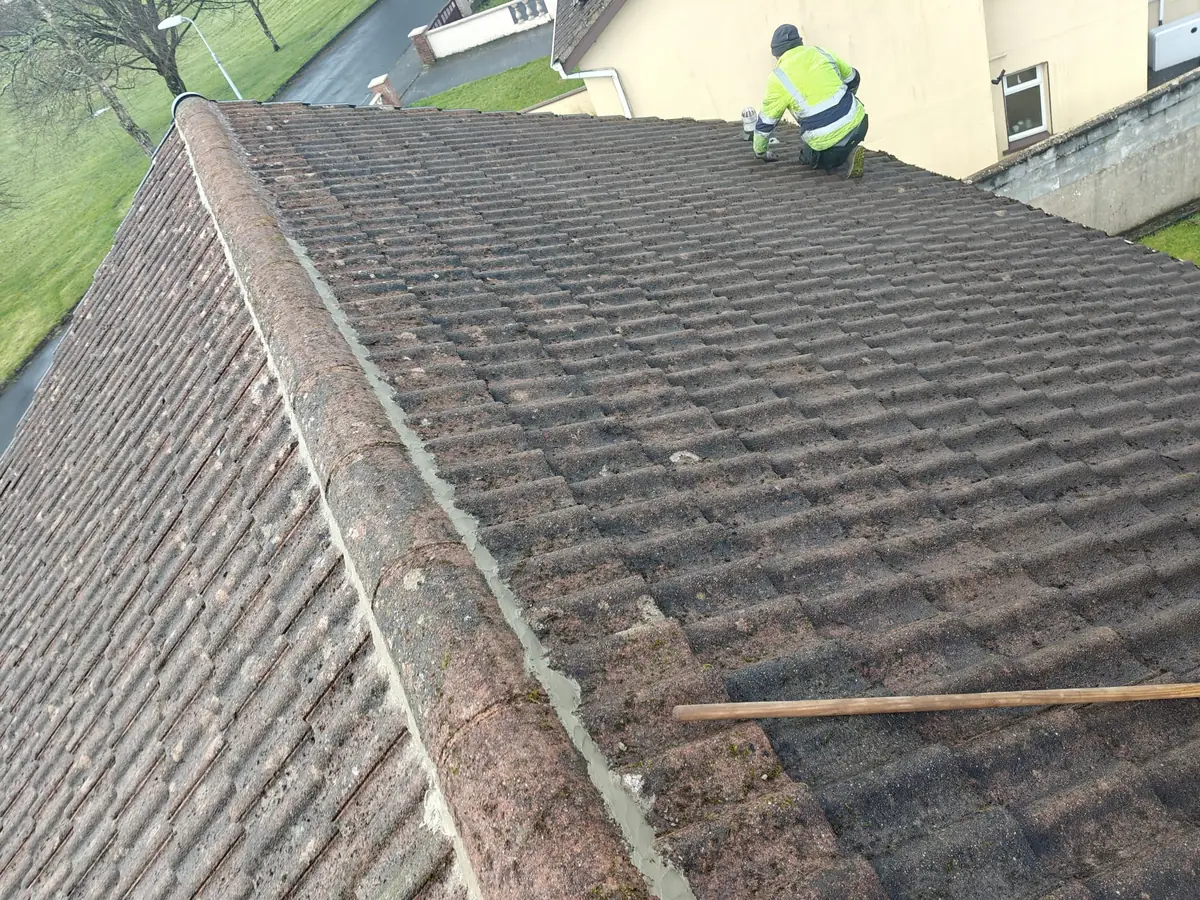
This is the part most grant guides skip. Insulation only works on a dry, weather-tight house. Fitting attic insulation or installing a heat pump on a property with slipped slates, a failing flat roof, or blocked gutters is a fast route to condensation, timber rot and ruined insulation.
Irish weather makes this a practical concern. Even small defects allow water to track behind insulation and into roof timbers. At Recommended Roofing we have worked on homes in Cork, Limerick, Galway and Dublin where newly insulated attics developed damp problems because cracked tiles or a corroded valley were never addressed before the grant works began.
Before you book the SEAI survey, it is worth getting a professional roof inspection to flag any issues that should be fixed first. Typical pre-retrofit jobs include:
A sagging or blocked gutter is often a sign of a deeper problem. shows a job where sagging gutters turned out to be a rotten timber issue behind the fascia: re-hanging the gutter on the old board would only have hidden the fault. Getting the roofline into sound condition before insulation works begin is the right sequence.
SEAI grants do not cover structural roof repairs or gutter replacement. The following indicative ranges apply to work Recommended Roofing carries out across Cork, Limerick, Galway and Dublin. All figures are indicative for 2026 and VAT at 13.5% applies on top. A free written quote is always available after a site visit.
Indicative 2026 price range in euro, VAT at 13.5% extra
For replacement work, full re-roof pricing depends on roof area, pitch, material and access. See our price guide or request a free inspection and written quote.
The biggest mistake we see is taking the works in the wrong order. The sequence that protects your investment is:
Completing step one before steps three to six is the difference between a retrofit that lasts and one that develops moisture problems inside a few years. If your property needs more than spot repairs before the upgrade, a planned roofing repair carried out ahead of the SEAI works avoids more expensive remediation later.
Use any waiting period between application and works to get your roof and gutters into the condition the upgrades deserve. See our guide to SEAI retrofit grants in 2026 for further detail on the grant routes, and read about attic insulation and roof ventilation for guidance on what a sound roof needs before insulation is fitted.
Recommended Roofing has carried out roof repairs and roofline work across all four areas we serve.
“Fantastic experience. Fixed my gutter issue quickly and no issues afterwards. Quick efficent and at a good price. Highly recommended for the galway area.”Jeffrey Mahony, Galway, ★★★★★ on GoogleIf you are preparing your home for a grant-funded upgrade and need a pre-retrofit inspection or repair, our teams cover Cork, Limerick, Galway and Dublin.
To request a free, no-obligation written quote, visit our contact page or call the number for your area above. A pre-retrofit roof inspection is also a useful starting point before your SEAI survey visit.
No. SEAI grants fund energy upgrades including insulation, heat pumps, ventilation and solar PV, not structural roof repairs or gutter replacement. Those remain the homeowner's responsibility and should be completed before insulation and heat pump works begin.
You should not. SEAI panel contractors will typically refuse to install attic insulation in a roof with active leaks or visible damp, because the insulation will absorb moisture and lose performance. Fix the roof first, then proceed with the grant works.
The Warmer Homes Scheme is an SEAI programme that provides fully-funded energy upgrades to eligible homeowners at no out-of-pocket cost. Works typically include attic insulation, wall insulation, heat pumps and ventilation improvements. Eligibility is based on receiving qualifying social welfare payments. Check seai.ie for the current qualifying criteria.
The Warmer Homes Scheme is fully funded for qualifying households and a contractor from the SEAI panel is appointed on your behalf. Better Energy Homes and the One Stop Shop are open to all homeowners regardless of income, with grants that part-fund the cost of upgrades. You appoint your own registered contractor and claim the grant on completion.
Common qualifying payments include Fuel Allowance, Working Family Payment, One-Parent Family Payment, Domiciliary Care Allowance, Carer's Allowance and Disability Allowance. SEAI publishes the definitive and current list on seai.ie, and you should check that before applying.
Only if the fabric of the home is upgraded first. A heat pump fitted to a poorly insulated property will run inefficiently. SEAI requires a technical assessment before grant-aiding a heat pump, so attic and wall insulation upgrades should come first.
At Recommended Roofing, a quote visit for work we could carry out is free and no-obligation. A written quote is provided after the site visit. Call the number for your area in Cork, Limerick, Galway or Dublin to arrange.
Roof leak repairs at Recommended Roofing range from €400 to €2,500 indicatively for 2026, depending on the cause, access and extent of the damage. Emergency storm damage work ranges from €1,500 to €8,000. VAT at 13.5% applies on top. A free written quote is available after a site visit.
Yes. Recommended Roofing covers Cork, Limerick, Galway and Dublin. Each area has a direct phone number: Cork 021 2040925, Limerick 061 788600, Galway 091 622895, Dublin 01 2657795.
Yes, and ideally before the SEAI survey visit. A clear roof condition report lets you sequence repairs first, avoids rework once grant works begin, and gives the SEAI surveyor confidence that the home is fit for the upgrades.
Repairs carry a minimum three-year written guarantee, up to ten years on major repair work. Replacement work carries a ten-year guarantee plus the Lifetime Leak Guarantee. Guarantees are in writing before any contract is signed.
Check eligibility on seai.ie, gather proof of any qualifying payment and your MPRN, then submit your application online or by post. SEAI arranges a free technical survey, and under the Warmer Homes Scheme a contractor is appointed on your behalf. Under Better Energy Homes or the One Stop Shop you appoint a registered contractor yourself and claim the grant on completion.
Roof Repairs in Ireland. Free survey, written fixed-price quote, 10-year guarantee.