Lead Flashing and Chimney Aprons in Dublin
Why Code 4 Lead Corrodes on Coastal Chimneys in Clontarf, Dollymount and Sandymount
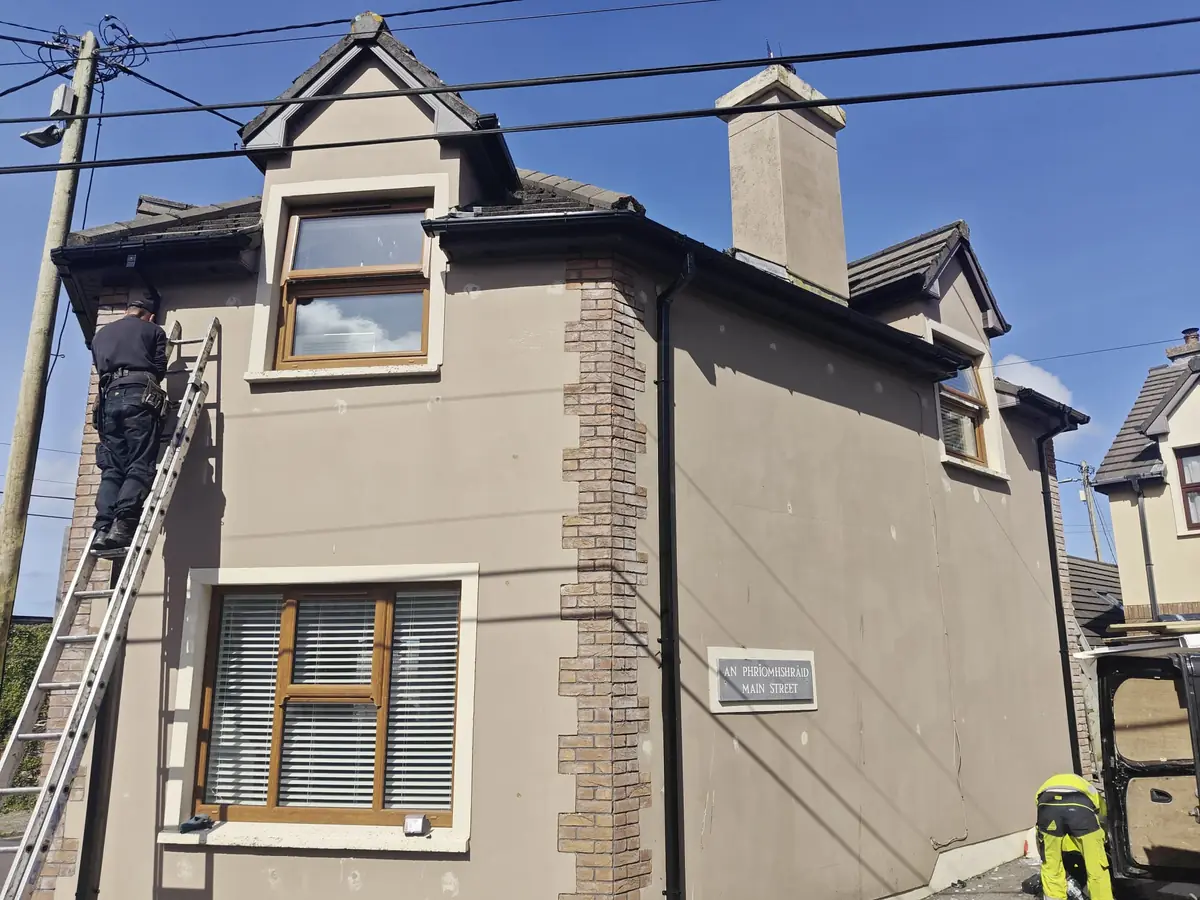

Why Code 4 Lead Corrodes on Coastal Chimneys in Clontarf, Dollymount and Sandymount
Code 4 lead flashing corrodes prematurely on east-facing Dublin Bay chimneys because salt-laden onshore winds combine with sulphate residues from decades of solid-fuel smoke to form lead carbonate and lead sulphate, a white, powdery corrosion that eats through 1.80mm sheet far sooner than you would expect inland. On coastal stacks in Clontarf, Dollymount and Sandymount, we specify Code 5 (2.24mm) as the minimum, patination oil applied on the same day the lead is dressed, and separate soakers rather than continuous aprons. If your chimney apron is showing white bloom or streaking tiles below, call 01 2657795 for a free inspection and written quote.
Indicative 2026 price range, roof flashing repair in Dublin, in euro
Indicative 2026 price range, roof flashing repair in Dublin, in euro
Anyone who has re-flashed a chimney within 500 metres of the Bull Wall knows the drill. Strip the old apron off and the underside is chalky white, pitted and paper-thin along the water line. That is not old age, that is electrochemistry.
Onshore winds off Dublin Bay carry chloride aerosols inland as far as Fairview and Ballsbridge on a strong easterly. On top of that, the housing stock in Clontarf, Dollymount, Sandymount and Ringsend was built between roughly 1900 and 1940 and burned coal and turf for the guts of a century. The mortar joints, brick faces and chimney flaunching still leach sulphates every time it rains. Mix chlorides, sulphates and Ireland's substantial annual rainfall, and Code 4 lead struggles on an exposed east elevation. Aspect matters more than age.
Lead sheet codes are thickness bands, and thickness buys you sacrificial metal:
| Code | Thickness | Weight (kg/m²) | Typical use | Coastal Dublin verdict |
|---|---|---|---|---|
| Code 3 | 1.32mm | 14.97 | Soakers only | Never for aprons |
| Code 4 | 1.80mm | 20.41 | Standard flashings inland | Underspec on the coast |
| Code 5 | 2.24mm | 25.40 | Aprons, back gutters, exposed sites | Minimum for Bay-facing stacks |
| Code 6 | 2.65mm | 30.05 | Large aprons, tabling | Belt-and-braces on Dollymount seafront |
Corrosion does not progress linearly. Because pitting attack concentrates at the same surface defects regardless of thickness, the extra 0.44mm of Code 5 can substantially extend service life in a chloride-rich environment. On a stack you are paying scaffold to reach, the material uplift per chimney is a rounding error against a second call-out.
Fresh lead reacts with rainwater within hours to form lead carbonate, that milky-white run-off that streaks down slates and stains render below the stack. It is cosmetic early on but becomes corrosive over years, because the carbonate layer is not cohesive on vertical or steep-pitched surfaces. It washes off, exposes fresh metal, and the cycle repeats.
Patination oil, typically a smoke-oil derivative applied with a lint-free cloth the same day the lead is dressed, creates a stable, uniform grey patina and blocks the initial carbonate reaction. It costs around €18 a bottle and covers four to five average chimneys. If you see white streaks below a stack that was done in the last two or three years, that is a clear diagnostic: the flashing was not finished properly.
This is where Dublin coastal work differs from what you would do in, say, Terenure or Templeogue.
Continuous flashing, a single dressed apron up the side of a stack, is faster to fit, uses fewer pieces and looks clean from the ground. It is fine inland. On the coast it has one weakness: thermal movement. A long length of Code 4 lead on a south-east elevation expands and contracts measurably across a summer day. That flexing work-hardens the metal along the water line, and salt attack finishes the job.
Individual soakers, one piece of Code 3 per slate or tile course, tucked under and dressed over, paired with a separate cover flashing chased into the mortar joint, give two lines of defence and eliminate the long unbroken lengths that fatigue-crack. The work takes around 40% more labour on a standard stack, but on a Dollymount or Sandymount chimney it is what we specify by default.
For lead flashing repair work, indicative 2026 pricing runs from €400 to €2,500 depending on access, scaffold requirements and how much of the apron and soaker set needs replacing. VAT at 13.5% applies on top. The exact cost is confirmed after a free site inspection, call 01 2657795 and we will come out and give you a written quote.
A few non-negotiables we follow on the DART-line houses between Clontarf and Sandymount:
These are not fussy details. They are what separates a long-lasting flashing from one that fails inside a decade.
Not every stack needs a full strip. If the upstand is sound but the pointing has failed, a proper re-wedge and lime re-point can buy meaningful extra life for a modest outlay, within the €400 to €2,500 repair range depending on access and the amount of mortar work involved. If you are seeing white bloom on 30% or more of the surface, or pinholing when you catch it in raking light, the metal is done. Patching new lead onto old creates a bimetallic cell and accelerates corrosion on the older sheet.
An honest inspection matters. Most of the roof repairs we quote on coastal chimneys are staged, flashing this year, ridge re-bed next, and we tell homeowners exactly what can wait.
Working across Dublin, we see distinct microclimates that change what we specify:
If you are in the south city, our teams covering Ranelagh roof repairs and Terenure roof repairs handle a lot more slate work than coastal flashing, different tools, different specification. You can also see examples of completed work in our project gallery.
"Really happy with service provided. They were extremely helpful and efficient from start to finish. An assessment and quote were provided the day after I first got in touch, and the repair was completed within a week. The issue and proposed solution were clearly explained, and I really appreciated that they recommended a proportionate repair rather than simply suggesting everything needed to be replaced. Very professional, straightforward and efficient service. Would definitely recommend."Alice Daniels, Dublin, ★★★★★ on Google
Repair work at Recommended Roofing carries a written guarantee of a minimum of 3 years, with up to 10 years on major repair work. Every guarantee is handed over in writing before contracts are signed, not promised afterwards. We employ our own crews directly and do not subcontract, so the people detailing your flashing are our people. You can read what Dublin homeowners say about the work on our reviews page.
Coastal exposure affects chimneys and flashings far beyond Dublin Bay. If you are in Cork, Limerick or Galway and have a flashing concern, our local teams cover the same ground:
To arrange a free inspection of your chimney flashing, contact us online or call 01 2657795 for the Dublin team. We will survey the stack, tell you honestly whether it needs a repair or a full re-flash, and give you a written fixed-price quote with no obligation.
We also wrote “Who to Trust for Roof Replacement Cost Dublin Quotes” on our WordPress page.
Onshore winds off Dublin Bay carry chloride aerosols, and the older housing stock in Clontarf, Dollymount and Sandymount leaches sulphates from decades of coal and turf burning. The combination of chlorides, sulphates and rainfall attacks lead sheet chemically, producing lead carbonate and lead sulphate corrosion that thins 1.80mm Code 4 sheet far sooner than you would see inland.
Lead carbonate and lead sulphate, the corrosion products of salt spray and atmospheric sulphates reacting with unprotected lead. Light bloom in the first year or two is a sign patination oil was skipped. Persistent chalky pitting means the metal is thinning and needs assessment.
Code 5 (2.24mm) is the minimum we specify on east-facing Dublin Bay stacks. On the most exposed Dollymount seafront aprons we use Code 6 (2.65mm). Code 4 (1.80mm) is standard for inland work but underspec on the coast.
Indicative 2026 pricing for lead flashing repair runs from €400 to €2,500 depending on access, whether scaffold is needed and the extent of the work. VAT at 13.5% applies on top. A free site visit gives you a written fixed price.
Not automatically. Scaffolding is priced in only where the building is very high or on a busy street where pedestrian safety requires it. Most chimney re-flash jobs are done from ladders or, where reach demands it, a cherry picker. Where scaffolding is needed it appears as a separate line on the quote, never buried in the price.
Patination oil is applied to freshly dressed lead on the same day it is fitted. It creates a stable grey patina that prevents the initial carbonate reaction, stopping the white streaking that damages slates and render below the stack. It costs around €18 a bottle and covers four to five chimneys. Skipping it is one of the most common signs of a job done cheaply.
A continuous apron is a single dressed length of lead running up the side of the chimney, faster to fit but prone to fatigue cracking on coastal stacks because thermal movement works the metal along the water line. Individual soakers are one piece of Code 3 lead per tile or slate course, paired with a separate cover flashing, giving two lines of defence and eliminating the long unbroken lengths that crack. On coastal Dublin stacks we specify soakers by default.
No. Paint traps moisture between the coating and the metal, accelerating pitting. Bituminous flashing paint sold in DIY shops is a short-term cosmetic fix that makes eventual replacement harder. The correct approach is patination oil on new lead, or full replacement if the existing sheet is already pitted.
Usually yes. Cracked flaunching lets water into the top of the stack, which travels down inside the brickwork and undermines the flashing chase from behind. We quote both together and only skip the flaunching if it is genuinely sound.
If you are seeing white bloom on 30% or more of the lead surface, or pinholing visible in raking light, the metal is done and full replacement is the right call. If only the pointing has failed and the lead itself is sound, a re-wedge and lime re-point may be all that is needed. We assess this on site and tell you honestly what can wait.
Repair work carries a written guarantee of a minimum of 3 years, with up to 10 years on major repair work. The guarantee is handed over in writing before contracts are signed. We use our own directly employed crews and do not subcontract.
Call 01 2657795 or use the contact form at recommendedroofing.ie. We visit the site, inspect the stack internally and externally, and give you a written fixed-price quote with no obligation.
Roof Repairs in Dublin, Ireland. Free survey, written fixed-price quote, 10-year guarantee.