How to Vet a Roofer in Dublin
CIRI Checks, Dublin City vs Dún Laoghaire-Rathdown Council References and Red Flags Before You Sign
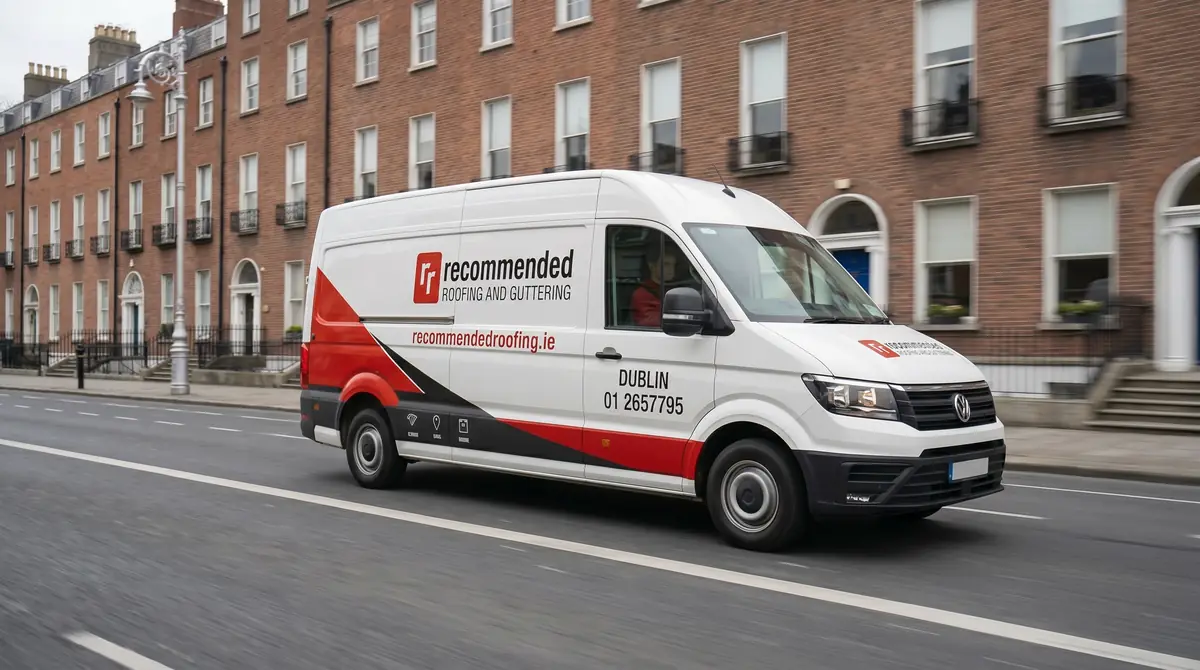

CIRI Checks, Dublin City vs Dún Laoghaire-Rathdown Council References and Red Flags Before You Sign
Vetting a Dublin roofer properly takes about 30 minutes: confirm CIRI membership on the CIF register, ask for two council-verifiable references from your own local authority (Dublin City, Dún Laoghaire-Rathdown, Fingal or South Dublin), request their tax clearance access number and public liability certificate, and walk away from any doorstep quote issued within days of a named storm. If you want a shortcut, call Recommended Roofing on 01 2657795 for a fixed-price quote from a vetted local crew.
Before you sign anything or pay a deposit, tick every item below. None of these takes more than a phone call or a search.
If any single item is missing, pause. Legitimate Dublin roofers expect these questions and answer them without irritation. Recommended Roofing has been CIRI-registered since it was founded in Cork in 2019, carries €6.5 million public liability and €13 million employer's liability, and employs its own crews directly. You can check those credentials before you appoint anyone.
CIRI is the Construction Industry Register Ireland, operated by the Construction Industry Federation. It became the statutory register under the Regulation of Providers of Building Works Act 2022, though full mandatory registration is being phased in. For homeowners now, CIRI membership is the strongest baseline signal that a roofing contractor is legitimate.
What CIRI confirms:
What CIRI does not guarantee:
To check: go to ciri.ie, search by company name or CRO number, and screenshot the result. If a contractor tells you they are with the CIF but you cannot find them in the CIRI search, note that CIF membership and CIRI registration are not the same thing.
Dublin has four local authorities and they do not handle roofing works identically. For a standard re-roof or roof repair on an existing dwelling, you generally do not need planning permission. It falls under exempted development in the Planning and Development Regulations 2001 (Schedule 2, Part 1, Class 50), provided the materials and profile match the existing roof. Where councils differ is in building control notifications, protected structures and Architectural Conservation Areas.
Dublin City Council covers a large stock of protected Georgian structures in Rathmines, Portobello, Ballsbridge and the north Georgian core. If your house is on the Record of Protected Structures, even a like-for-like slate replacement can require a Section 57 declaration or full planning consent. Ask any roofer directly: have you completed a Section 57 job in the last two years, and can I speak to that homeowner?
Dún Laoghaire-Rathdown has its own dense cluster of protected structures across Monkstown, Dalkey, Killiney and Blackrock, plus Architectural Conservation Areas in Dundrum village and Stillorgan. DLR's conservation team is known among Dublin roofers for being detail-focused on natural slate specification, lead code and ridge detailing. A roofer working in Dundrum, Stillorgan or Sandyford should be able to describe the DLR conservation officer process without hesitation.
Fingal County Council covers the north county: Swords, Malahide, Howth, Portmarnock. Coastal exposure at Howth Head means wind-uplift specification matters more than council paperwork for most jobs.
South Dublin County Council covers Tallaght, Lucan, Clondalkin and the southwestern belt. Less protected-structure work here, more 1970s to 1990s estate housing where the vetting focus should shift to insurance, warranty and referenceable local jobs.
Practical council-reference question: can you give me the name and address of two homeowners you have worked for in my council area in the last 12 months? A local roofer will have this ready. A transient trader will not.
Every winter, named storms roll across Ireland and cause ridge tiles to lift and slates to slip across South Dublin. Within days of each storm, a predictable pattern emerges, particularly in Terenure, Ranelagh and Goatstown:
The most common outcomes from engaging these traders: partial work, no invoice, no follow-up, no recourse. If you need an honest post-storm assessment, use a settled local contractor for emergency roof repair rather than whoever knocks first. Recommended Roofing is available 24 hours a day for storm damage and will give you a written fixed-price quote before any work begins.
Rule of thumb: if a roofer approaches you within a week of a named storm, treat that as a red flag until proven otherwise. Established Dublin roofers are booked solid after a storm and are not driving estates looking for doors to knock.
If you see any two of these together, end the conversation:
Getting two names is step one. Step two is asking the right questions:
If a reference hesitates on question four or five, that tells you more than any star rating. Reputable Dublin roofers are also happy to show recent completed roofing projects and filmed jobs. You can see examples of Recommended Roofing's own Dublin work in our job videos and case studies.
“Really happy with service provided. They were extremely helpful and efficient from start to finish. An assessment and quote were provided the day after I first got in touch, and the repair was completed within a week. The issue and proposed solution were clearly explained, and I really appreciated that they recommended a proportionate repair rather than simply suggesting everything needed to be replaced. Very professional, straightforward and efficient service. Would definitely recommend!”Alice Daniels, Dublin, ★★★★★ on Google
Use these ranges as a sanity check against any quote. All figures are indicative 2026 guidance only; confirm exact costs with your contractor after a free inspection. VAT at 13.5% applies on top.
Indicative 2026 price range in euro, VAT at 13.5% extra
A quote should always be a fixed price in writing, not an open-ended day rate. Our price guide sets out what moves a price within these ranges, and a free quote visit is available with no obligation across all four Dublin local authority areas.
Recommended Roofing backs every job in writing before contracts are signed. Repair work carries a minimum three-year guarantee, rising to ten years on major repair work. Full roof replacement work carries a ten-year guarantee plus the Lifetime Leak Guarantee on every replacement. No registration, no upsell: it is automatic on every job.
See our customer reviews and case studies for examples of completed Dublin work and what homeowners said about it.
To request a free, fixed-price quote from a CIRI-registered Dublin roofer with directly employed crews, call 01 2657795 or visit our contact page. The quote is written, no-obligation and includes a full scope of works before anything is signed.
We also wrote “Emergency Roof Repair Dublin: What It Costs and What to Do” on our Blogger page.
CIRI became the statutory register under the Regulation of Providers of Building Works Act 2022, but full mandatory enforcement is being phased in. In practical terms, if a roofer is not on CIRI now they are either very new or choosing not to register. Both warrant extra scrutiny from a homeowner.
Go to ciri.ie, search by the company name or CRO number, and screenshot the result. Note that CIF membership and CIRI registration are not the same thing: a contractor may claim to be with the CIF without being on the CIRI register.
Not usually. Like-for-like re-roofing on a non-protected structure is exempted development under the Planning and Development Regulations 2001. If your house is on the Record of Protected Structures or in an Architectural Conservation Area, you may need a Section 57 declaration from your council's conservation officer. Check before you agree a quote, not after.
A minimum of €6.5 million public liability and, if they employ anyone, €13 million employer's liability. Ask for the certificate, check the expiry date, and confirm that roofing work at height is specifically included.
On a job under €10,000 no deposit should be required at all. On jobs of €10,000 or more, a deposit of around 33% with the balance on completion is standard practice. Any demand for full payment before materials arrive on site is a red flag.
Take their details but do not sign anything and do not pay a deposit. Get at least one further written quote from an established local firm before deciding. Doorstep contracts carry a 14-day cooling-off period under the European Union (Consumer Information, Cancellation and Other Rights) Regulations 2013, but avoiding the situation is easier than enforcing that right.
Ask whether the final invoice matched the original quote, whether the crew cleaned up and removed all waste, whether they arrived on the days they promised, whether anything has failed in the first winter after the job, and whether the homeowner would use them again for a bigger job.
Indicative 2026 ranges are €400 to €2,500 for a roof leak repair, and €1,500 to €8,000 for emergency storm damage work. VAT at 13.5% applies on top. The final cost depends on the cause, access requirements and how far water has already travelled. A free inspection quote is the only reliable way to get an accurate figure.
Emergency tile or slate securing as a temporary measure is typically €200 to €500. An emergency structural safety assessment is typically €200 to €400. These are indicative 2026 ranges; VAT at 13.5% applies on top. The permanent repair is quoted separately once it is safe to assess properly.
Yes. Recommended Roofing covers Dublin City, Dún Laoghaire-Rathdown, South Dublin and Fingal. The team is CIRI-registered and directly employed, and can provide references from within your council area.
Repair work carries a minimum three-year written guarantee, rising to ten years on major repairs. Full roof replacement work carries a ten-year guarantee plus the Lifetime Leak Guarantee on every replacement. All guarantees are automatic and issued in writing before contracts are signed.
Call Recommended Roofing on 01 2657795 or use the contact page at recommendedroofing.ie/contact/. The quote visit is free with no obligation, the price is fixed and written before any work begins, and there is no deposit required on jobs under €10,000.
Roof Repairs in Dublin, Ireland. Free survey, written fixed-price quote, 10-year guarantee.